Visiting Kerid Crater and the Golden Circle in Winter
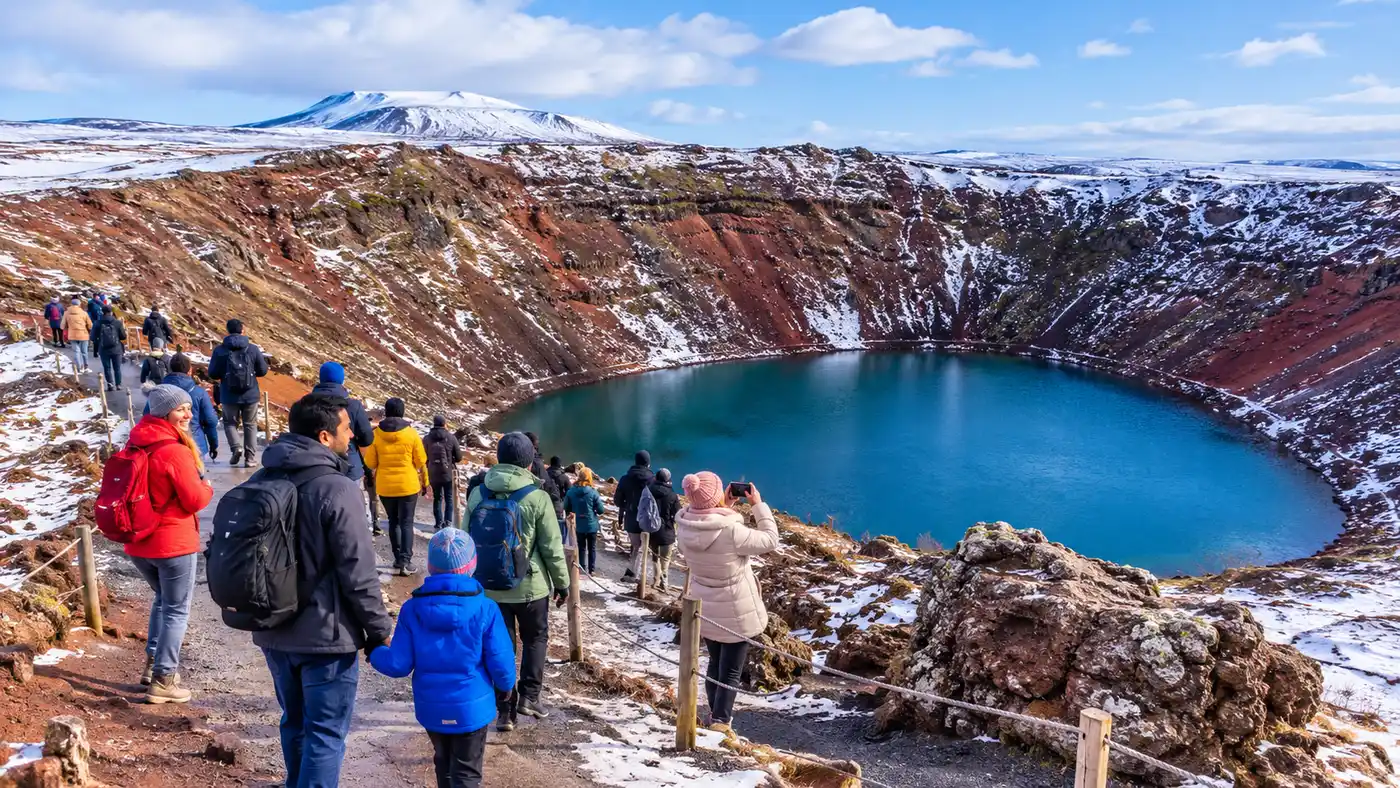
Most travelers imagine Iceland under the midnight sun, with vibrant green moss clinging to black basalt and tourists milling around in light rain jackets. If you pull up to the rim of Kerid in January, though, you enter an entirely different world. Snow blankets the steep slopes of red volcanic rock, turning the rust-colored scoria into alternating stripes of crimson and white, while the lake below freezes into an opaque disk of ice. Visiting kerid crater winter landscapes gives you a quiet, raw perspective on South Iceland that summer crowds never get to see.
Planning a trip around the Golden Circle between November and March requires a different mindset than touring during the warm months. The daylight drops down to just four or five hours, black ice coats Route 35, and wind gusts can yank a rental car door clean off its hinges if you park facing the wrong direction. Yet winter brings an ethereal twilight that lasts all day, casting soft pink and amber light across the snowfields. This guide covers what you need to know about navigating the crater and the surrounding sights when temperatures plunge below freezing.
Book your kerid crater iceland experience:
What Kerid Winter Actually Looks Like
Kerid is famous for its vivid contrasts. During summer, the mineral-rich caldera lake glows a striking shade of aquamarine against red volcanic slag and green hillsides. When winter arrives, that palette shifts. Snow fills the fissures in the crater walls, accentuating the dramatic geometry of the bowl. The red rock still cuts through the frost, but the water freezes over completely by mid-December, transforming into a thick pane of milky ice dusted with drift snow.
Walking around the upper rim takes roughly 15 minutes if you keep a steady pace, though it took me nearly 35 minutes on my last visit because I kept stopping to brace against the wind and adjust my camera. The path along the ridge is completely exposed. Without any tree cover or natural windbreaks, Arctic gusts whip across the plains from the north and hit you square in the face. If you visit in early morning or late afternoon, the low winter sun hangs right above the southern horizon, lighting the frozen basin with a gorgeous golden sheen.
Note: The wooden staircase leading down to the lake shore freezes into solid, sloping ice sheets after heavy snowfall. Unless you have microspikes strapped to your boots, stay on the upper rim trail to avoid sliding down into the crater wall.
Descending to the water level is possible when conditions allow, but the wooden steps often disappear under packed snow. Park rangers do not salt or clear this trail daily. People sometimes ask if you can walk out onto the frozen lake. While you might spot local footprints venturing onto the edges, the depth of the water is about 14 meters, and thermal vents beneath the surface mean ice thickness varies unpredictably across the lake. Honestly, standing on the rim gives you a far better view of the geology anyway.
Driving the Golden Circle in Winter: November Through March
Taking on the Golden Circle self-drive route in winter is entirely manageable for sensible drivers, provided you check the weather before breakfast and respect the conditions. The roads are paved all the way from Reykjavik through Thingvellir, Geysir, Gullfoss, and down to Kerid. The Icelandic Road and Coastal Administration plows these highways regularly, but sudden squalls can turn a clear morning into whiteout conditions within twenty minutes.
Your experience changes drastically depending on which winter month you choose. The golden circle in november still offers around six to seven hours of light, and snow might not yet have settled permanently on the lowlands. By the time you reach the golden circle in december and the golden circle in january, you contend with winter solstice conditions. The sun rises around 11:15 AM and sinks behind the mountains by 3:45 PM. You spend more time driving in the dark than in daylight, which makes efficient routing essential.
By the golden circle in march, daylight rebounds to twelve hours, giving you ample time to linger at each stop without rushing to beat nightfall. The temperatures remain brisk, often hovering right around freezing, but the roads are far easier to manage than during midwinter storms.
| Month | Daylight Hours | Avg Low / High | Road Conditions | Vibe & Crowd Level |
|---|---|---|---|---|
| November | 6 - 8 hours | -1°C / 4°C (30°F / 39°F) | Wet, occasional slush, patches of black ice | Moderate crowds, shoulder-season quiet |
| December | 4 - 5 hours | -3°C / 2°C (27°F / 36°F) | Packed snow, frequent icy ruts, low visibility | Busy around Christmas, very short days |
| January | 4.5 - 6 hours | -4°C / 1°C (25°F / 34°F) | Deep snow drifts, icy stretches, high wind risk | Quiet, stark winter lighting |
| February | 7 - 9 hours | -3°C / 2°C (27°F / 36°F) | Variable; freeze-thaw cycles create slick ice | Steady traffic, great northern lights chances |
| March | 10 - 13 hours | -2°C / 3°C (28°F / 37°F) | Clearing highways, lingering snowfields | Livelier, brighter, pleasant spring approach |
Always rent a four-wheel-drive vehicle fitted with studded winter tires between November and April. Rental companies in Iceland fit studded tires as standard during winter, but inspect the treads before leaving the lot in Keflavik. Those small metal studs provide the mechanical grip you need when stopping on glazed ice near roundabouts and parking lots.
Essential Gear for Cold-Weather Exploring
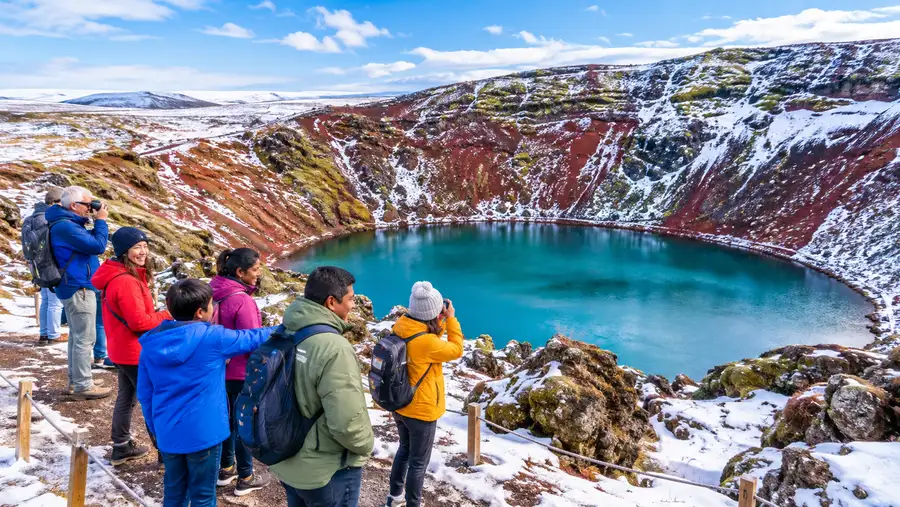
Stepping out of a warm vehicle into a sub-zero gale cuts through standard denim and fashion jackets in seconds. Staying warm is not about heavy bulk; it requires smart layering. The rim of Kerid is wide open to the elements, and standing by the edge of Gullfoss waterfall exposes you to freezing spray that coats your outer garments in a crust of frost.
- Yaktrax or microspikes: slip-on traction cleats turn impossible ice rinks into stable walking surfaces and belong in your daypack everywhere you go.
- Windproof outer shell: a rugged, waterproof Gore-Tex or similar jacket stops brutal glacial wind that thermal fleeces cannot block on their own.
- Insulated boots with deep tread: cold seeps up through shoe soles surprisingly fast when you stand on frozen volcanic slag.
- Balaclava or fleece neck gaiter: keeping your neck and chin covered prevents windburn when gusts kick up loose ice pellets.
- Touchscreen-compatible glove liners: you will want to take photos every five minutes, and exposing bare skin to freezing wind causes numbness within seconds.
Pro tip: Keep your camera batteries and smartphone in an interior coat pocket close to your chest. Sub-zero temperatures drain lithium-ion batteries within thirty minutes if they are exposed to the ambient cold air.
Bring along a thermos filled with hot coffee, tea, or soup. Facilities at Kerid are minimal, and there is no cafe on site to warm up in after your walk. Having something steaming to sip in the car before setting off for the next sight makes a massive difference to your mood.
Book your kerid crater iceland experience:
Pairing Kerid with the Rest of the Route
Because daylight is scarce in midwinter, you have to plan the order of your stops with precision. Most travelers run the circuit counter-clockwise, beginning at Thingvellir National Park, proceeding to the Haukadalur geothermal field to watch the Strokkur geyser erupt, stopping at Gullfoss, and hitting Kerid on the return loop south toward Selfoss.
Reversing that route works nicely during short days. If you set out from Reykjavik in the dark around 9:00 AM, you reach Kerid just as the morning twilight breaks across the southern plains around 10:30 AM. From there, you catch the midday sun at Gullfoss, where freezing mist paints massive icicles along the canyon walls, and finish your daylight window watching steam plumes rise against the dusk at Geysir.
Thingvellir can be explored in dim twilight or even after dusk if you stick to the lit boardwalks through the Almannagja gorge. The historic rift valley looks magnificent in deep snow, with frozen drownings pools and snow-capped tectonic walls framing the horizon. Check out our breakdown of the top Golden Circle sights to see how the geological formations compare across the seasons.
Winter also brings the possibility of catching the aurora borealis dancing above the crater. Because Kerid sits well away from the light pollution of Reykjavik, pulling into the parking lot on a clear, dark night gives you an unobstructed view of the night sky. The dark volcanic bowl creates an eerie, beautiful foreground if the northern lights flare across the northern sky.
Practical Details for Winter Entry and Parking
Unlike Thingvellir, Gullfoss, and Geysir, which are public lands, Kerid is privately owned by a local consortium of landowners who maintain the paths and protect the delicate volcanic environment. Because of this, an entry fee is collected at a small hut near the parking area.
- Admission cost: the fee is 450 ISK (roughly $3.30), payable via contactless credit or debit card at the gate attendant's window.
- Operating hours: the crater rim is technically accessible during all daylight hours, though the small attendant hut is typically staffed from around 9:30 AM until dusk.
- Parking lot maintenance: the gravel lot right off Route 35 is plowed, but hard-packed snow and hidden potholes remain, so park gently.
- Restroom availability: there are no permanent public restrooms at the crater, meaning you should plan comfort stops at the service centers in Geysir or Reykholt.
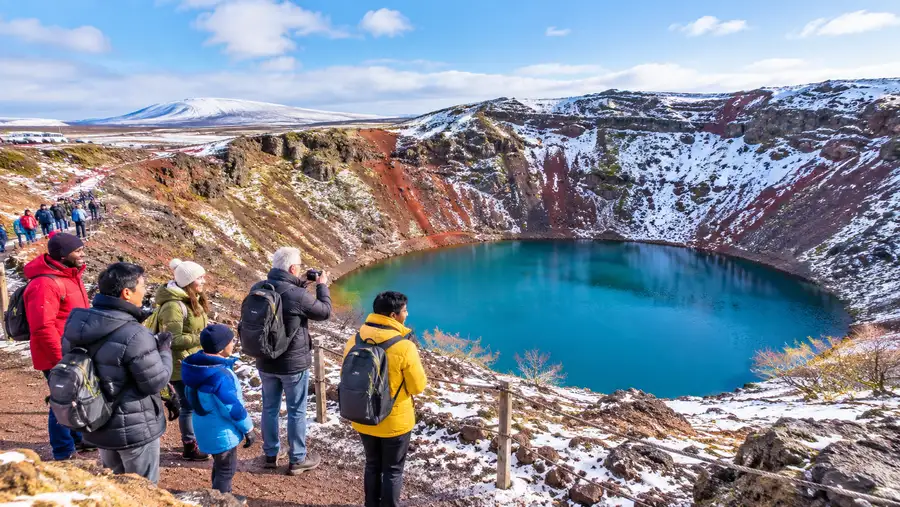
The walk from the parking area to the crater rim is short, about 100 meters across flat ground. That proximity makes Kerid a welcome stop on bitterly cold afternoons when hiking miles into the backcountry is out of the question. You can hop out, take in the grandeur of the frozen lake, complete the rim circuit, and get back to the heated seats of your car before deep chill sets in.
Frequently Asked Questions about kerid crater winter
Is Kerid Crater open during winter storms?
The site remains physically open because there are no closing gates on the trails, but you should never drive Route 35 during official yellow or red weather alerts. If roads are marked impassable on safe.is, the crater is functionally closed.
Can you walk on the frozen lake at Kerid?
No, walking onto the ice is discouraged and unsafe. Subsurface thermal vents and fluctuating water levels make the ice thickness irregular across the basin floor, creating a genuine risk of falling through into freezing water.
Do I need crampons to visit Kerid in winter?
You do not need technical mountaineering crampons, but simple slip-on microspikes or ice cleats are essential. The packed snow on the rim trails turns into slick glare ice after a few tour groups walk across it.
How long should I spend at Kerid Crater in the cold?
Plan for 30 to 45 minutes. That gives you plenty of time to walk the entire perimeter of the upper rim, take photos of the snow-dusted caldera, and return to your vehicle without freezing.
Quick Reference
- Entry fee: 450 ISK per person
- Drive time from Reykjavik: roughly 1 hour 15 minutes
- Best footwear: winter boots with slip-on microspikes
- Daylight window: 4 to 5 hours in December and January
Book your kerid crater iceland experience:
My Take on Visiting Kerid in Winter
There is an austere, quiet beauty to South Iceland in winter that summer simply cannot match. Standing on the lip of Kerid with the wind whistling over the red scoria rock while looking down at a silent, frozen lake makes you feel the true volcanic nature of this island. Bundle up in proper windproof layers, watch your footing along the rim, keep an eye on road forecasts, and enjoy the dramatic contrasts of ice and fire.
Read more about kerid crater iceland.